

CS336: Language Modeling from Scratch
Stanford / Spring 2026 ()
Course Staff

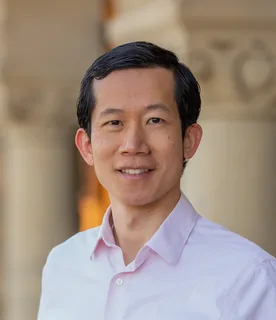


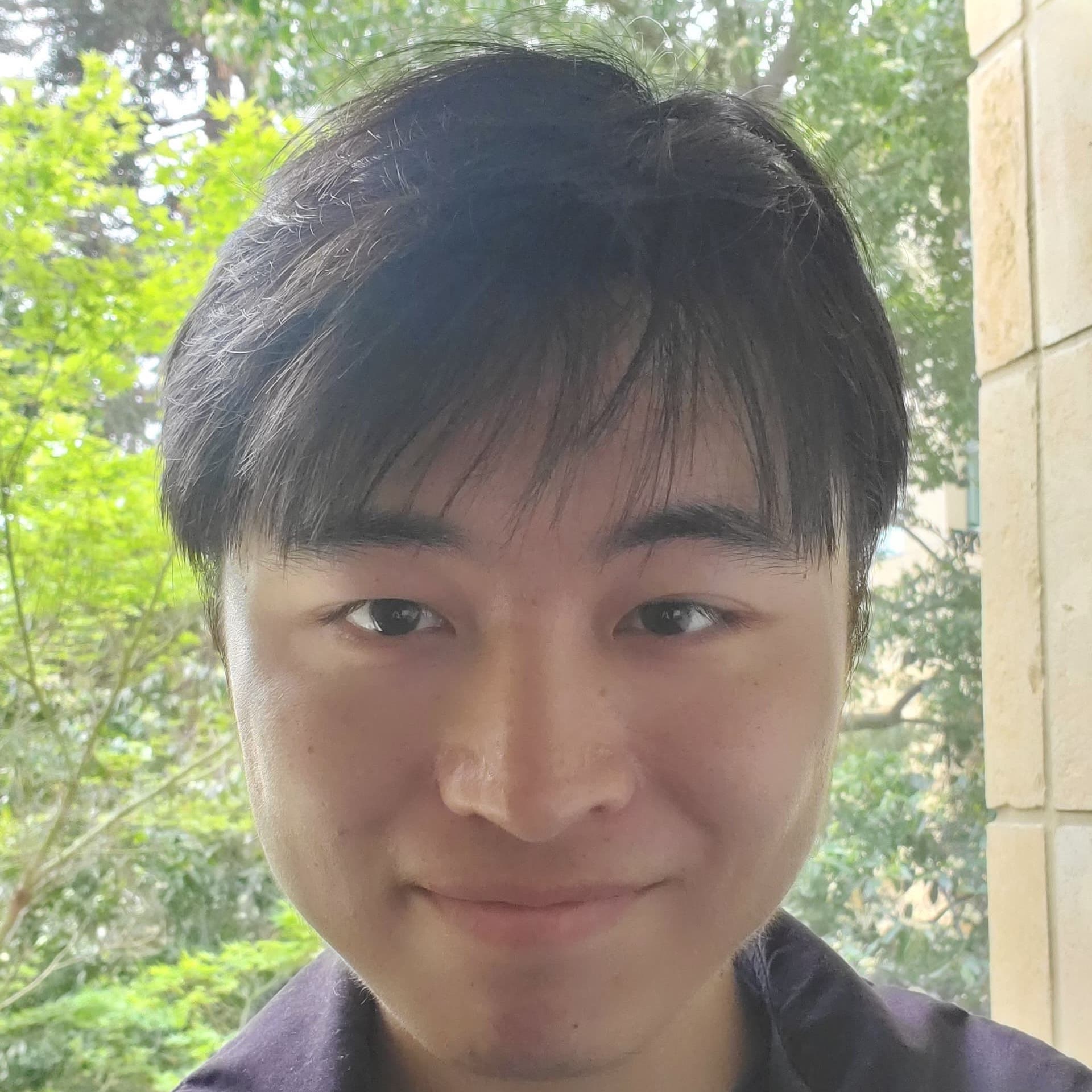
Logistics
- Lectures: Monday/Wednesday 3:00-4:20pm in Skilling Auditorium
-
Office hours:
- Percy Liang: Fridays 11-12am in Gates 366
- Tatsu Hashimoto: Tuesdays 11-12am in Gates 364
- Marcel Rød: Tuesdays 4:30-5:30pm in Gates 498, Wednesdays 4:30-5:30pm in Gates 415
- Herman Brunborg: Wednesdays 1:30-2:30pm, Fridays 1:30-2:30pm, location Gates 392
- Steven Cao: Mondays 4:30-5:30pm, Thursdays 9:30-10:30am, Gates 200
- Contact: Students should ask all course-related questions in public Slack channels. All announcements will also be made in Slack. For personal matters, email cs336-spr2526-staff@lists.stanford.edu.
Content
What is this course about?
Language models serve as the cornerstone of modern natural language processing (NLP) applications and open up a new paradigm of having a single general purpose system address a range of downstream tasks. As the field of artificial intelligence (AI), machine learning (ML), and NLP continues to grow, possessing a deep understanding of language models becomes essential for scientists and engineers alike. This course is designed to provide students with a comprehensive understanding of language models by walking them through the entire process of developing their own. Drawing inspiration from operating systems courses that create an entire operating system from scratch, we will lead students through every aspect of language model creation, including data collection and cleaning for pre-training, transformer model construction, model training, and evaluation before deployment.
Prerequisites
-
Proficiency in Python
The majority of class assignments will be in Python. Unlike most other AI classes, students will be given minimal scaffolding. The amount of code you will write will be at least an order of magnitude greater than for other classes. Therefore, being proficient in Python and software engineering is paramount.
-
Experience with deep learning and systems optimization
A significant part of the course will involve making neural language models run quickly and efficiently on GPUs across multiple machines. We expect students to be able to have a strong familiarity with PyTorch and know basic systems concepts like the memory hierarchy.
-
College Calculus, Linear Algebra (e.g. MATH 51, CME 100)
You should be comfortable understanding matrix/vector notation and operations.
-
Basic Probability and Statistics (e.g. CS 109 or equivalent)
You should know the basics of probabilities, Gaussian distributions, mean, standard deviation, etc.
-
Machine Learning (e.g. CS221, CS229, CS230, CS124, CS224N)
You should be comfortable with the basics of machine learning and deep learning.
Note that this is a 5-unit class. This is a very implementation-heavy class, so please allocate enough time for it.
Coursework
Assignments
-
Assignment 1: Basics
- Implement all of the components (tokenizer, model architecture, optimizer) necessary to train a standard Transformer language model.
- Train a minimal language model.
-
Assignment 2: Systems
- Profile and benchmark the model and layers from Assignment 1 using advanced tools, optimize Attention with your own Triton implementation of FlashAttention2.
- Build a memory-efficient, distributed version of the Assignment 1 model training code.
-
Assignment 3: Scaling
- Understand the function of each component of the Transformer.
- Query a training API to fit a scaling law to project model scaling.
-
Assignment 4: Data
- Convert raw Common Crawl dumps into usable pretraining data.
- Perform filtering and deduplication to improve model performance.
-
Assignment 5: Alignment and Reasoning RL
- Apply supervised finetuning and reinforcement learning to train LMs to reason when solving math problems.
- Optional Part 2: implement and apply safety alignment methods such as DPO.
GPU compute for self-study
If you are following along at home, you can access GPU compute from a cloud provider to complete the assignments.
Here are a few options (public pricing for a single B200 GPU on March 28, 2026):
- Modal (sponsor): $6.25/hour. Offers $30 of free monthly compute. You are only charged for actual compute (no idle resources) and their UX makes switching between local dev and large-scale gpu experiments simple. (Modal Pricing)
- Lambda Labs: $6.69/hour (Lambda Pricing)
- RunPod: $4.99/hour (RunPod Pricing)
- Nebius: $5.50/hour ($3.05/hour preemptible) (Nebius Pricing)
- Together: $7.49/hour, minimum 8 GPUs, cheaper for longer commitments (Together Pricing)
For convenience and to save money, we recommend debugging correctness of your implementation on CPU first and then using GPU(s) (with the count recommended in the assignments) for completing training runs (A1, A4, A5) or benchmarking GPU operations (A2).
Honor code
Like all other classes at Stanford, we take the student Honor Code seriously. Please respect the following policies:- Collaboration: Study groups are allowed, but students must understand and complete their own assignments, and hand in one assignment per student. If you worked in a group, please put the names of the members of your study group at the top of your assignment. Please ask if you have any questions about the collaboration policy.
- AI tools: Prompting LLMs such as ChatGPT is permitted for low-level programming questions or high-level conceptual questions about language models, but using it directly to solve the problem is prohibited. We strongly encourage you to disable AI autocomplete (e.g., Cursor Tab, GitHub CoPilot) in your IDE when completing assignments (though non-AI autocomplete, e.g., autocompleting function names is totally fine). We have found that AI autocomplete makes it much harder to engage deeply with the content. See the AI policy.
- Existing code: Implementations for many of the things you will implement exist online. The handouts we'll give will be self-contained, so that you will not need to consult third-party code for producing your own implementation. Thus, you should not look at any existing code unless when otherwise specified in the handouts.
Submitting coursework
- All coursework are submitted via Gradescope by the deadline. Do not submit your coursework via email.
- If anything goes wrong, please ask a question in Slack or contact a course assistant.
- You can submit as many times as you'd like until the deadline: we will only grade the last submission.
- Partial work is better than not submitting any work.
Late days
- Each student has 6 late days to use. A late day extends the deadline by 24 hours.
- You can use up to 3 late days per assignment.
Regrade requests
If you believe that the course staff made an objective error in grading, you may submit a regrade request on Gradescope within 3 days after the grades are released.
Sponsor
We would like to thank Modal for sponsoring compute for this class.
Schedule
| # | Date | Description | Course Materials | Deadlines | |
|---|---|---|---|---|---|
| 1 | Mon March 30 | Overview, tokenization [Percy] | lecture_01.py |
Assignment 1 out
[code] [preview] [leaderboard] |
|
| 2 | Wed April 1 | PyTorch (einops), resource accounting (FLOPs, memory, arithmetic intensity) [Percy] | lecture_02.py (recording version) | ||
| 3 | Mon April 6 | Architectures, hyperparameters [Tatsu] | lecture 3.pdf | ||
| 4 | Wed April 8 | Attention alternatives and mixture of experts [Tatsu] | lecture 4.pdf | ||
| 5 | Mon April 13 | GPUs, TPUs [Tatsu] | |||
| 6 | Wed April 15 | Kernels, Triton, XLA [Percy] |
Assignment 1 due
Assignment 2 out |
||
| 7 | Mon April 20 | Parallelism [Percy] | |||
| 8 | Wed April 22 | Parallelism [Tatsu] | |||
| 9 | Mon April 27 | Scaling laws [Tatsu] | |||
| 10 | Wed April 29 | Inference [Percy] |
Assignment 2 due
Assignment 3 out |
||
| 11 | Mon May 4 | Scaling laws [Tatsu] | |||
| 12 | Wed May 6 | Evaluation [Percy] |
Assignment 3 due
Assignment 4 out |
||
| 13 | Mon May 11 | Data (sources, transformation, filtering) [Percy] | |||
| 14 | Wed May 13 | Data (mixing, rewriting, SFT) [Percy] | |||
| 15 | Mon May 18 | Alignment - RLHF (DPO) [Tatsu] | |||
| 16 | Wed May 20 | Alignment - RL (algorithms) [Tatsu] |
Assignment 4 due
Assignment 5 out |
||
| Mon May 25 | No class (Memorial Day) | ||||
| 17 | Wed May 27 | Alignment - RL (systems) [Percy] | |||
| 18 | Mon June 1 | Guest lecture | |||
| 19 | Wed June 3 | Guest lecture | Assignment 5 due |